
Why equipment rental management software is essential for real-world billing complexity
Billing in construction equipment rentals is rarely straightforward. Some customers require deposits, others do not. Certain projects span multiple states with different tax rules. Damage charges may not be known until equipment is inspected after off-rent. These variables stack quickly, especially for contractors and rental operations managing high volumes of transactions across multiple jobsites.
What makes billing challenging is not the number of rules—it is the lack of systems designed to handle those rules without slowing operations. This is where equipment rental management software becomes critical. Flexible billing only works when it is embedded into the same system that manages rentals, dispatch, utilization, and returns.
Deposits That Match the Risk of the Rental
Not every rental relationship carries the same level of exposure. High-value equipment, new customers, or short-term external rentals often require deposits, while internal or long-standing accounts may not. Managing these exceptions manually introduces inconsistency and administrative effort.
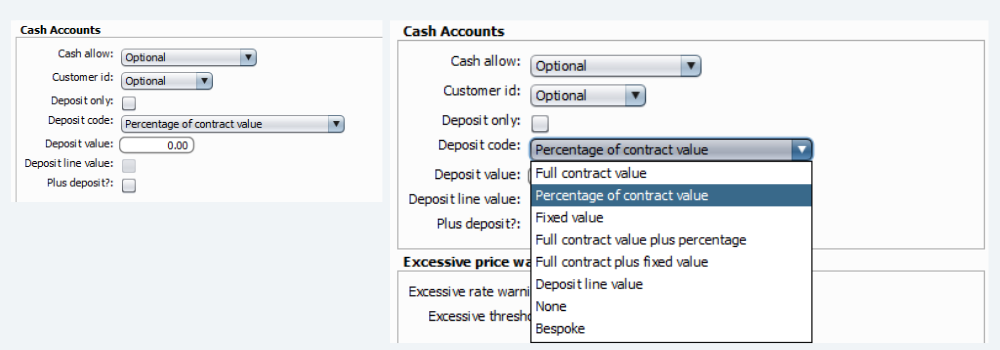
A modern rental management system allows deposit requirements to be defined at the customer or transaction level. Teams can enforce security deposits where risk is higher while waiving them where relationships and history justify it. These rules are applied automatically, ensuring consistency without requiring manual oversight on every transaction.
This level of control is difficult to maintain without equipment rental management software that understands customer profiles, rental contracts, and equipment value in context.
Handling Late Fees and Damage Charges Without Delays
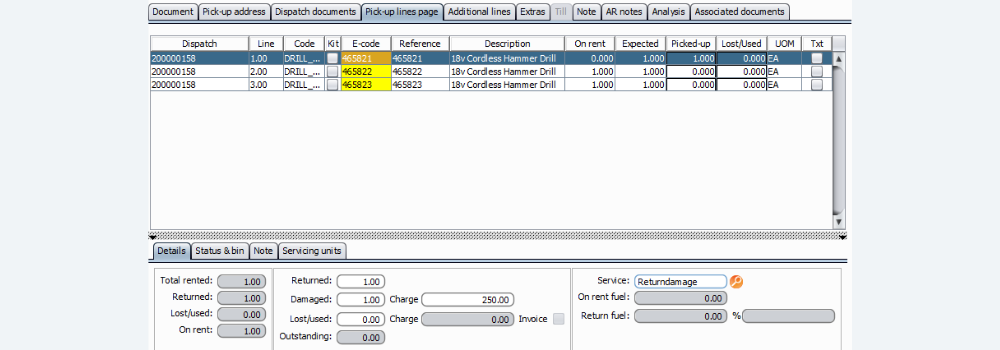
Late returns and damaged equipment are an unavoidable part of rental operations. The challenge is applying charges accurately without creating friction at the counter or delays in getting equipment back into service.
Flexible billing workflows allow late fees, service charges, and standard cleaning fees to be applied automatically based on predefined rules. Damage charges can be added after inspection, once the condition of the asset is confirmed, rather than forcing teams to resolve everything at the moment of return.
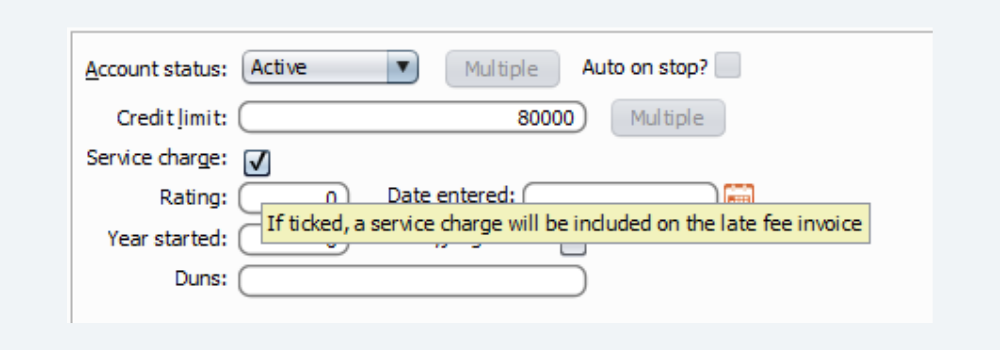
When these billing actions are tied directly to rental and return workflows inside Equipment rental management software, operations stay efficient while financial control is maintained.
Tax Compliance Across Jobs, Regions, and Jurisdictions
Construction rental billing becomes even more complex when equipment crosses state or provincial lines. Different tax jurisdictions apply different rules, and manual calculation introduces risk.
Rental operations benefit from systems that can either automate tax calculation through integrated tools or support detailed, region-specific tax rules configured directly into the system. This ensures that invoices reflect the correct tax treatment without forcing teams to become tax experts for every transaction.
When tax logic is handled within the equipment rental system, billing accuracy improves and compliance risk declines—especially at enterprise scale.
Cash Payments and Same-Day Rentals Still Need Control
Even in highly digitized rental operations, cash payments and walk-in transactions still occur. Same-day equipment needs should not bypass deposit rules, tax logic, or billing controls simply because they happen quickly.
A flexible billing framework supports cash payments while still enforcing the same rules applied to account-based rentals. This consistency protects margins and ensures that fast-moving transactions do not create downstream reconciliation issues.
How Equipment Rental Management Software Enables Flexible Billing
Flexible billing does not work as a standalone function. Equipment rental management software connects billing rules directly to rental contracts, dispatch, utilization reporting, and returns. This integration ensures that financial outcomes reflect operational reality.
When billing is aligned with how equipment is actually used and returned, rental operations gain clearer insight into profitability by asset, customer, and project. Finance teams trust the data. Operations teams spend less time resolving exceptions. Leadership gains confidence that billing supports, rather than constrains, growth.
Billing That Supports Growth, Not Bottlenecks
Flexible billing is not about adding complexity—it is about handling unavoidable complexity without slowing the business. Construction equipment rentals operate in a world of exceptions, and systems must be built for that reality.
With Equipment rental management software at the core, billing rules become enforceable, transparent, and scalable. Deposits, fees, taxes, and payments align with how work actually happens in the field, rather than forcing teams into workarounds.
Interested in seeing how RentalResult helps simplify complex billing in real-world rental operations? Schedule a custom demo to see how our equipment rental management software supports flexible billing, contract enforcement, deposits, fees, taxes, and utilization insight—all in one connected system.