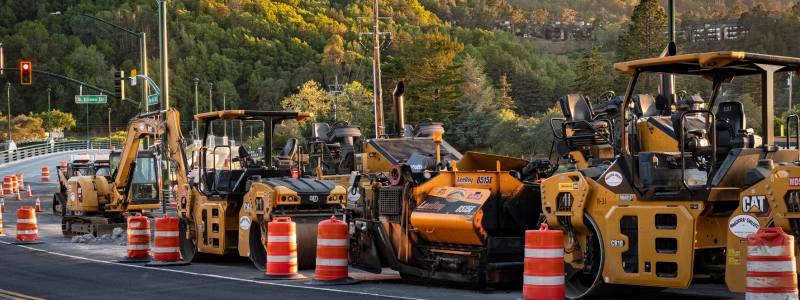
The Hidden Complexity of “Just Getting Equipment to Site”
Why Project Startup Exposes Operational Gaps
Every contractor knows the phrase: “We just need to get the equipment to site.”
It sounds simple. It never is.
Behind that statement is a compressed window of decisions—what to source, where to get it, how fast it can arrive, and how it will be tracked once it does—ideally through construction equipment tracking software. Industry conversations consistently point to the same reality: project startup is where even well-run operations begin to feel friction. Industry research on construction productivity challenges has consistently highlighted how fragmented workflows and poor visibility slow down project execution.
Not because teams lack experience, but because the process itself is inherently dynamic. Equipment needs don’t follow clean workflows. They arrive all at once, change daily, and demand immediate action.
That’s where complexity takes over.
One Request, Multiple Outcomes
At the start of a project, a single equipment request rarely leads to a single action.
Instead, it opens a chain of decisions. Should this come from internal fleet? Should it be re-rented from a supplier? Is it something worth purchasing for longer-term use? And how quickly can each option realistically get to site?
In practice, these decisions are happening simultaneously across dozens—sometimes hundreds—of assets. Different items within the same job may follow entirely different sourcing paths. What looks like one request is actually multiple workflows running in parallel.
This is where many operations begin to lose clarity. Not because the decisions are wrong, but because they are being made in isolation, without a unified view of availability, commitments, or cost impact.
Speed Creates Blind Spots
The pressure of project timelines forces speed. Equipment is needed immediately, not when systems are perfectly aligned.
Field teams are asking for assets today. Procurement is sourcing what it can. Fleet teams are reallocating equipment across jobs. Vendors are delivering directly to site. Everyone is moving fast—but not always in sync.
This is where blind spots emerge.
It becomes difficult to answer simple but critical questions:
- What has actually been sourced?
- What is still outstanding?
- What has arrived—and is it in use?
- What is this going to cost over time?
Without clear visibility, teams default to reactive coordination. Industry reports continue to show that construction projects frequently experience cost overruns, often driven by gaps between field activity and financial tracking. Calls are made. Emails are sent. Spreadsheets are updated. Work continues—but clarity doesn’t.
The Moment That Defines Control: Delivery Confirmation
One of the most important points in the entire process is also one of the least structured—the moment equipment arrives on site.
At that point, someone has to confirm:
- The asset is physically there
- It matches what was requested
- It is now in use
That confirmation sounds operational, but it is deeply connected to financial accuracy.
It is often the trigger for cost recognition, invoice matching, and project-level reporting. If that step is inconsistent or delayed, everything downstream becomes harder to trust.
This is where many contractors feel the disconnect between field operations and financial systems. The equipment may be working—but the system doesn’t fully reflect reality.
Why Traditional Systems Fall Short
Most enterprise contractors rely on ERP systems to manage procurement and financial control. These systems are essential—but they were not designed for the fluid nature of equipment operations.
They expect structured inputs. Defined transactions. Clear sequencing.
Project startup offers none of that.
Instead, it introduces:
- Mixed sourcing decisions within a single request
- Real-time changes in availability and priority
- Asset-level tracking requirements
- Ongoing cost streams tied to usage, not just purchase
This creates a gap. Operations manages the complexity. Finance records the outcome. The connection between the two is often delayed, manual, or incomplete.
How Construction Equipment Tracking Software Closes the Gap
Leading contractors are starting to rethink this gap—not by replacing their financial systems, but by strengthening the operational layer that sits in front of them.
This is where Construction Equipment Tracking Software becomes critical—giving teams real-time visibility into every asset, from request to delivery.
Not as a passive tracking tool, but as an active system of record for equipment decisions. It brings structure to the part of the process that has historically been the least controlled—the space between request, sourcing, delivery, and usage.
When implemented effectively, it changes how teams operate:
Instead of asking “Where do we get this?” teams can see what is available across the fleet.
Instead of reacting to requests, they can make informed sourcing decisions in real time.
Instead of relying on manual confirmation, they can tie physical delivery directly to system updates.
Instead of reconciling costs after the fact, they can track them as they happen.
This is not about adding another system. It is about creating continuity across workflows that were never designed to work together.
Visibility At The Asset Level Changes Everything
The real shift happens when equipment is managed at the asset level—not just as a line item, but as a trackable, accountable unit.
That means every piece of equipment has:
- A clear source (owned, rented, or purchased)
- A defined location
- A known status
- A cost profile tied to the project
This level of visibility allows teams to move faster without losing control. It also changes how decisions are made. Instead of defaulting to new rentals or purchases, teams can optimize what they already have.
In an environment where margins are tight and utilization matters, that shift is significant.
Technology Alone Isn’t The Answer—Process Is
It is worth noting that visibility does not come from technology alone. It comes from combining technology with consistent process.
Barcodes, telematics, and asset identifiers all help—but only if they are applied accurately and consistently. Industry experience shows that even simple tracking methods can break down if workflows are unclear or accountability is missing.
The goal is not just to track equipment. It is to create a system where every operational action—requesting, sourcing, delivering, confirming—feeds into a reliable, shared view of reality.
From Reactive Startup To Controlled Execution
The difference between a chaotic startup and a controlled one is not the number of requests or the pace of the project. It is how well the process holds together under pressure.
When equipment workflows are connected:
- Teams spend less time chasing information
- Decisions are made with better context
- Costs are visible earlier and more accurately
- Equipment is utilized more effectively
This is where construction equipment tracking software like RentalResult fits naturally into the conversation. Not as a replacement for existing systems, but as the operational backbone that connects them—bringing clarity to a process that has traditionally been fragmented.
Control Is The Real Competitive Advantage
“Just getting equipment to site” will never be simple. It involves too many variables, too much urgency, and too many moving parts.
But it doesn’t have to feel chaotic.
Contractors that treat equipment management as a structured, connected workflow—supported by the right systems—are able to turn project startup into a point of control rather than a source of risk.
That shift doesn’t just improve the first days of a project. It sets the tone for everything that follows.
Explore how leading contractors are using construction equipment tracking software to bring visibility and control to equipment workflows—or book a demo to talk with a RentalResult expert about what a better process could look like in your operation.
The data accuracy problems that begin during equipment delivery are also central to the broader challenge of operational visibility in enterprise construction—a gap that affects project controls, fleet management, and ERP data quality.