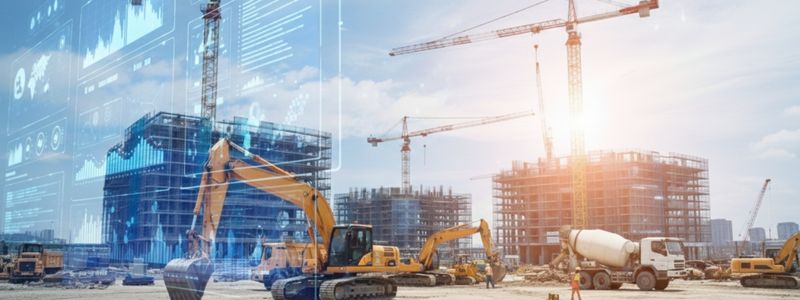
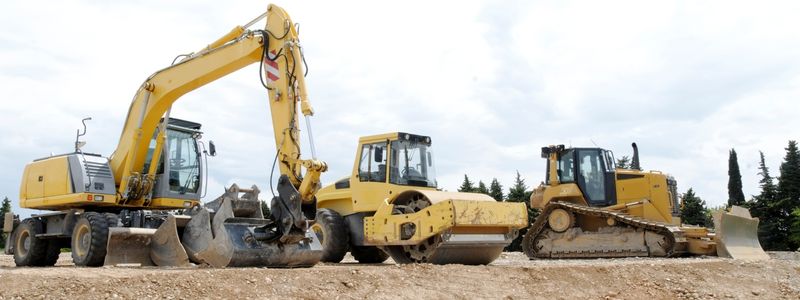
Managing high-value construction equipment—cranes, excavators, loaders, and more—isn’t only about keeping machines running. It’s also about understanding the full financial lifecycle of these assets. Depreciation is central to that lifecycle, helping construction companies account for declining equipment value over time so financial statements reflect real-world use.
But as fleets expand and equipment moves across projects, basic depreciation processes can break down. Different asset types, uneven usage, and changing project demands add complexity fast. This is where automation and stronger systems become valuable—especially when depreciation is managed within construction equipment management software that connects asset data, usage context, and financial reporting.
Why Depreciate Construction Equipment?
Depreciation is a standard accounting practice, but in construction it also influences planning and profitability. Calculating the diminishing value of equipment helps companies:
- Reflect true costs. Equipment value declines due to heavy utilization, harsh environments, and obsolescence. Depreciation spreads those costs across the asset’s useful life, improving the accuracy of asset values over time.
- Plan for replacement. Understanding how quickly an asset loses value helps forecast when critical equipment should be replaced—supporting budgeting and reducing the risk of downtime tied to end-of-life failures.
- Support tax advantages. Depreciation may provide tax benefits by reducing taxable income when depreciation is recorded as a business expense.
Strategic Approaches to Depreciation in Construction
Many teams start with familiar options like straight-line depreciation. But construction companies often need methods that better match asset behavior—especially when equipment sees heavier use early on or loses value quickly after purchase. Common strategies include:
Straight-Line Depreciation
This method assumes an asset loses value evenly across its lifespan. It’s simple and predictable, but it doesn’t always reflect how heavy construction equipment is used—where early years may see the most intense wear.
Declining Balance Depreciation
An accelerated approach that depreciates more in the early years. It’s often used for assets that experience intensive early use—where larger early deductions better reflect the wear and value drop soon after purchase.
Sum-of-the-Years’ Digits Depreciation
Another accelerated method that applies more depreciation upfront. This can be useful when equipment loses a significant portion of its value early but continues to perform reliably afterward.
In practice, construction companies may use a mix of methods depending on asset type, utilization patterns, and project needs. For example, items with steady use across projects may align with straight-line depreciation, while heavier machinery may be better suited for accelerated options early in the lifecycle.
The Challenge: Managing Depreciation Manually
As construction companies scale, manual depreciation management—spreadsheets or basic accounting tools—becomes harder to maintain. Different asset categories can require different approaches. Schedules may need to change. Equipment may shift between heavy and light usage depending on project demand. Tracking that accurately across hundreds or thousands of assets becomes a logistical burden.
Without automation, companies risk:
- Inconsistent depreciation practices. Applying different rules manually increases the likelihood of errors, which can lead to inaccurate financial reporting.
- Limited adaptability. Equipment usage isn’t static. Manual processes struggle to keep pace when depreciation assumptions need updating.
- Slow, labor-intensive reporting. When asset data is scattered across systems—or updated by hand—financial reporting becomes delayed and harder to trust.
Construction Equipment Management Software for Depreciation Automation
Automating depreciation saves time, but more importantly it improves accuracy and visibility. When depreciation is supported by construction equipment management software, organizations can standardize how depreciation rules are applied and reduce the rework that comes from manual calculations.
Here’s what automation can improve:
Consistency and Accuracy
Automated systems apply depreciation rules uniformly across assets, categories, or item codes—reducing manual entry errors and improving audit readiness.
Real-Time Adjustments
Equipment usage can swing significantly between projects. Automation can help teams update depreciation schedules when assumptions change. For example, an excavator used heavily on one site may later move into lighter duty—making the ability to adjust depreciation approach and timing more manageable.
Enhanced Reporting Capabilities
Automated reporting provides current visibility into asset value, depreciation status, and financial impact. That supports better decisions on repair vs. replace, redeployment, and long-term capital planning—without waiting for month-end spreadsheet updates.
Depreciation in RentalResult: Tailored Options for Complex Fleets
Construction fleets are rarely uniform, and depreciation needs aren’t either. RentalResult is built to support flexible depreciation structures that reflect how construction organizations actually manage equipment across categories and locations.
Key capabilities described in the original approach include:
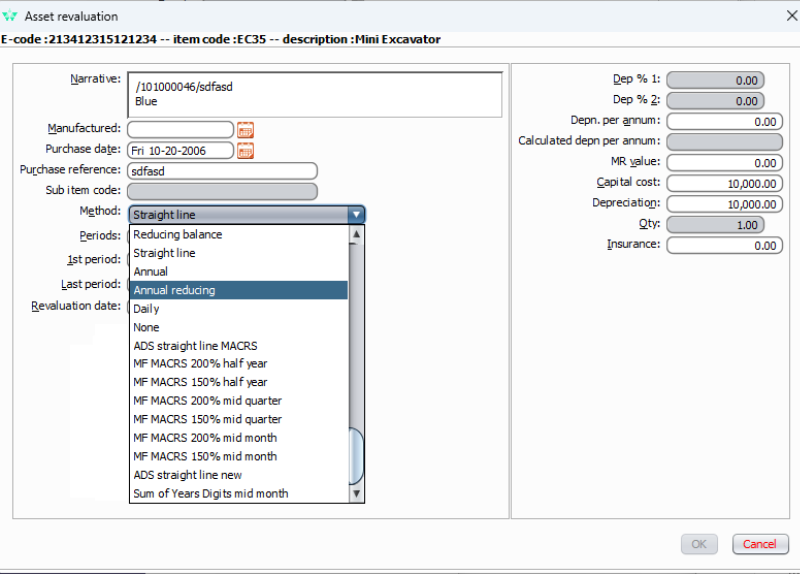
- Flexible depreciation rules. Depreciation can be set at multiple levels—by asset category, item code, or individual asset—so teams can match the method to the equipment’s characteristics and use.
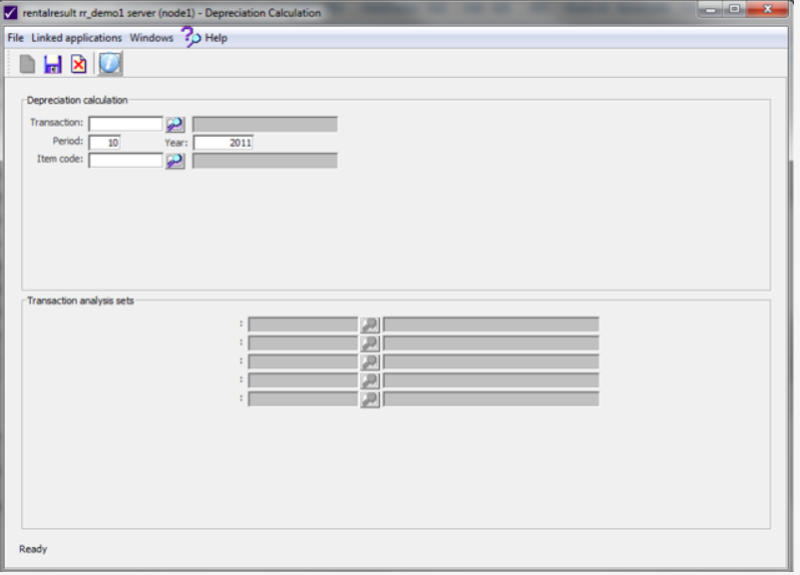
- Proposed and actual depreciation. Teams can run proposed depreciation reports to preview expected values before finalizing. Actual depreciation can then be calculated and posted to both asset records and the General Ledger, supporting accurate documentation.
- Bonus depreciation. For assets using MACRS (Modified Accelerated Cost Recovery System) depreciation policies, bonus depreciation options can be applied for additional flexibility in tax planning.
When depreciation is managed alongside asset lifecycle data—purchase, maintenance history, and eventual sale—finance and operations teams can work from the same source of truth.
The Long-Term Benefits of Automating Depreciation
Automating depreciation offers long-term benefits beyond time savings. When tied to equipment lifecycle management, automation becomes a lever for better financial outcomes and stronger operational planning:
- Tax optimization. Automated systems support applying the most tax-efficient depreciation methods per asset type, improving deductions and cash flow management.
- Informed asset management. Real-time insight into asset value supports decisions to sell, replace, or continue operating equipment—helping companies avoid holding assets that no longer make financial sense.
- Streamlined financial processes. Reducing manual depreciation work frees accounting teams to focus on analysis, forecasting, and capital planning—improving overall operational efficiency.
The Bottom Line: Automating Depreciation for Better Outcomes
In today’s construction environment, depreciation isn’t just an accounting requirement—it’s a strategic tool that affects financial health and operational efficiency. By automating depreciation within construction equipment management software, construction companies can improve accuracy, speed reporting, and make better decisions tied to asset utilization and lifecycle planning.
If you’re looking to streamline depreciation management and bring more discipline to the equipment lifecycle—from purchase to depreciation to final sale—RentalResult can help you automate these workflows and support more data-driven outcomes.
Stop managing depreciation in spreadsheets. Book a demo to see how RentalResult supports flexible depreciation rules, GL posting, and real-time asset visibility across your fleet.